Reading the panel
The Five Nerve Fresh Amounts, Explained One at a Time
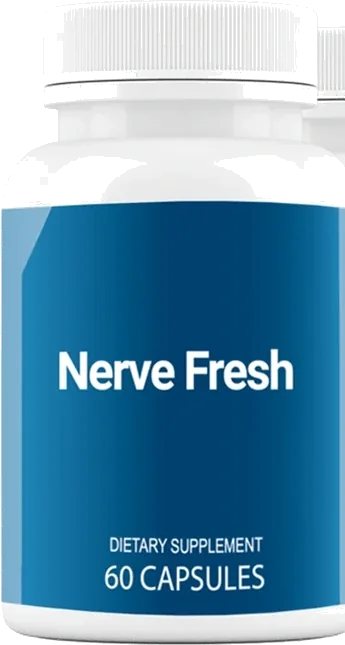
Two capsules give 350 mg passion flower herb powder, 220 mg marshmallow root powder, 200 mg corydalis root extract at 10:1, 100 mg prickly pear cactus powder and 90 mg California poppy whole plant extract, 960 mg in total. Each figure tells you the weight of plant material. None of them tells you what that material contains.
What 960 mg of herbs actually looks like
It looks like five numbers, and the useful thing about this bottle is that all five are printed. There is no proprietary blend to hide behind and nothing to work out by subtraction.
The five printed amounts, drawn to scalebars drawn to scale
- Passion Flower350 mg
- Marshmallow Root220 mg
- Corydalis Yanhusuo200 mg
- Prickly Pear Cactus100 mg
- California Poppy90 mg
Five ingredients, total0 mg
Read the bars as weight, not as importance. Passion flower is the tallest because 350 mg of ground herb weighs more than 90 mg of a concentrated extract, not because it does more. The five add to 960 mg a serving, and every figure here is printed on the bottle.
What follows takes each one in turn: what the plant is studied for, the kind of amounts that research uses, and what the printed figure does and does not settle. The full panel is on the Supplement Facts page.
350 mg of passion flower herb powder
The largest amount in the capsule, and the clearest signal of what this formula is for. Passion flower is a herb people take in the evening, not in the morning.
NCCIH says a small amount of research suggests passionflower might help anxiety symptoms and total sleep time, that the conclusions are not definite, and that drowsiness, dizziness and confusion are among the possible effects (NCCIH). Human studies have generally used teas, tinctures and standardized extracts rather than plain ground herb, which makes a direct comparison with a powder awkward from the start.
What 350 mg settles: the capsule contains 350 mg of dried, ground passion flower, and that is the biggest single share of the serving. What it does not settle: the panel says “Herb Powder” without naming the plant parts, and it gives no standardization figure. So 350 mg is a weight. Whether it carries much of whatever makes passion flower work is not published anywhere.
220 mg of marshmallow root powder
The second largest amount, and the strangest one to find here. Marshmallow root is a mucilage herb, which means it swells into a slippery gel in water.
The EU herbal monograph treats it as a demulcent for throat irritation, dry cough and mild stomach discomfort, and it carries a practical warning worth repeating: absorption of medicines taken at the same time may be delayed, so a gap of half an hour to an hour either side is advised (EMA). Traditional preparations are teas and syrups measured in grams, which is a long way from a capsule.
What 220 mg settles: you are getting 220 mg of dried ground root, roughly a quarter of the serving by weight. What it does not settle: why it is in a nerve formula. Nothing on the label or the sales page explains it, and a coating action in the throat has no obvious connection to nerves. The post on the label gaps puts that question with the others.
200 mg of corydalis root extract at 10:1
The only line on the panel with an extract ratio, and the one a pharmacist would look at first. It is also the ingredient with the most interesting research behind it and the least applicable research behind it, at the same time.
A compound isolated from this root, DHCB, reduced pain behavior in rodent models of inflammatory and nerve pain (Zhang and colleagues, 2014). That is a purified molecule, in animals, and it is why the plant keeps appearing in formulas like this one. It is not evidence about a capsule of powdered extract in a person.
What 200 mg at 10:1 settles: this is a concentrated extract rather than ground root, and by arithmetic on the printed figure, 200 mg of a 10:1 extract is usually described as equivalent to about 2,000 mg of starting root. What it does not settle: almost everything else. The ratio is a manufacturing description, not a strength. No marker compound is named, no percentage is given and no solvent is stated. The sedating herbs guide works through extract ratios properly.
100 mg of prickly pear cactus powder
The only food plant on the panel, and the one whose research sits furthest from this bottle. Nopal is a vegetable in Mexico and around the Mediterranean, eaten by the plateful.
Reviews of nopal cover blood sugar, cholesterol and antioxidants rather than nerves, and the amounts behind that work are food-sized, measured in grams of cactus pad rather than milligrams of powder (El-Mostafa and colleagues, 2014). The blood sugar angle is the one that matters practically. If you take medicine for diabetes, mention this ingredient to your pharmacist.
What 100 mg settles: the capsule contains 100 mg of dried nopal powder, about a tenth of the serving. What it does not settle: whether 100 mg of powder has anything in common with a study built on grams of fresh cactus pad. That is a gap of scale, not a gap of wording, and no extract ratio is printed to close it.
90 mg of California poppy whole plant extract
The smallest printed amount, and the third sedating plant in the list. It is a different species from opium poppy, contains no morphine, and is used as a mild sedative herb.
Human trial evidence for it is thin. What does exist is laboratory work finding that the extract and its alkaloids can affect CYP enzymes and P-glycoprotein, which are part of how the body clears many prescription drugs (Manda and colleagues, 2016). That was done in the laboratory, not in people, so it is a reason to mention the bottle to a pharmacist rather than a reason to worry. The side effects page lists the rest.
What 90 mg settles: this is an extract of the whole plant, and it is the smallest share of the serving. What it does not settle: how concentrated that extract is. The corydalis line prints a 10:1 ratio and this one prints nothing, so 90 mg could represent very little plant or a great deal of it.
What five printed numbers are worth
Quite a lot, and less than they look. A printed amount lets you compare bottles, gives a pharmacist something concrete to work with, and makes a claim checkable. It still measures weight rather than content.
| Ingredient and amount | What the number settles | What it leaves open |
|---|---|---|
| Passion flower herb powder, 350 mg | You are getting 350 mg of dried ground herb, the largest share of the serving | Which above-ground parts were used, and how much of any active compound they carried |
| Marshmallow root powder, 220 mg | You are getting 220 mg of dried ground root, the second largest share | Why a throat and stomach herb is in a nerve formula at all |
| Corydalis root extract 10:1, 200 mg | You are getting a concentrated extract, not plain powder | What it is standardized to, what solvent was used, and how much of anything active survived |
| Prickly pear cactus powder, 100 mg | You are getting 100 mg of dried nopal, a food plant | How a milligram amount relates to research done on the vegetable in grams |
| California poppy whole plant extract, 90 mg | You are getting the smallest share, from the whole plant | The extract ratio, which is printed for corydalis and not for this one |
- A milligram figure is a weight of plant material. It is not a measure of strength or of effect.
- Powder and extract cannot be compared directly. Extract is concentrated, powder is ground plant.
- A bigger number is not a better ingredient. Passion flower leads on weight because ground herb is bulky.
- The five add to 960 mg a serving, which is two capsules, so one capsule carries about 480 mg by simple arithmetic.
- No Daily Value exists for any of them, which is why every line on the panel carries an asterisk.
For each plant taken on its own terms, the ingredients page is the longer read.
Questions about the printed amounts
How much of each ingredient is in one capsule?
The panel gives amounts for a two-capsule serving. Halving them is simple arithmetic, so one capsule carries about 175 mg passion flower, 110 mg marshmallow root, 100 mg corydalis extract, 50 mg prickly pear and 45 mg California poppy.
Why does every amount have an asterisk beside it?
Because no Daily Value has been established for any of these plants. The asterisk points at the line that says so at the foot of the panel.
Is 350 mg of passion flower a lot?
It is the largest amount in this capsule. Whether it is a lot depends on the preparation, and human research has mostly used teas, tinctures and standardized extracts rather than plain powder.
What does 10:1 mean on the corydalis line?
Roughly ten parts of dried root were processed to make one part of extract. It describes the manufacturing, not the strength, and no compound is measured or named.
Which ingredients make you sleepy?
Passion flower, corydalis and California poppy are all sedating. Together they come to 640 mg of the 960 mg serving by arithmetic on the printed figures.
Sources for this page
- National Center for Complementary and Integrative Health. Passionflower. Source
- European Medicines Agency. European Union herbal monograph on Althaea officinalis L., radix (final). Source
- Zhang Y, Wang C, Wang L, et al. A Novel Analgesic Isolated from a Traditional Chinese Medicine. Current Biology, 2014. Source
- El-Mostafa K, El Kharrassi Y, Badreddine A, et al. Nopal cactus (Opuntia ficus-indica) as a source of bioactive compounds for nutrition, health and disease. Molecules, 2014. Source
- Manda VK, Avula B, Chittiboyina AG, et al. Modulation of CYPs, P-gp, and PXR by Eschscholzia californica (California Poppy) and its alkaloids. Phytotherapy Research, 2016. Source
Keep reading
Ready when you are
Order Nerve Fresh from the U.S. retail desk
Two capsules a day. Follow the label on your bottle. 180-day money-back guarantee. A real person at +1 (302) 200-3480 for orders, tracking and refunds.