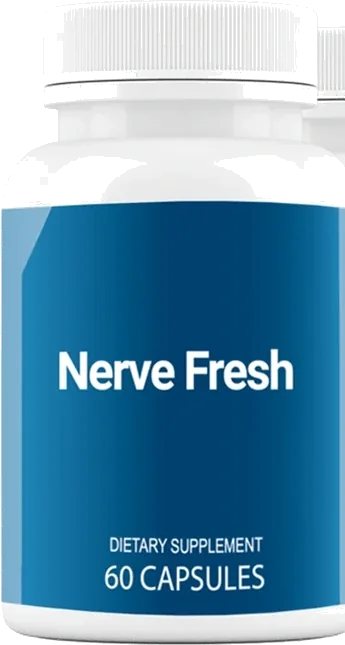
The category this capsule belongs to
Herbal Sedatives Explained, With Nerve Fresh as the Worked Example
A sedating herb is one whose main observable effect is to slow you down and make you sleepy. Three of the five plants in this capsule are in that group: passion flower at 350 mg, corydalis root extract at 200 mg and California poppy at 90 mg. Drowsiness is therefore the effect to plan an evening around, not a surprise to report afterwards.
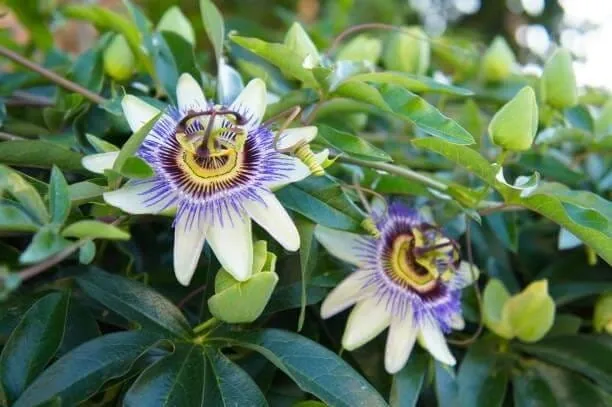
What does “sedating herb” actually mean?
It means a plant whose most reliable effect in people is to slow them down. Not sharpen, not energise. Calm, heavy eyelids, and an easier time falling asleep.
The phrase is loose, because plants are not drugs with a single molecule and a measured dose. A herb holds dozens of compounds, and how much of each one reaches a capsule depends on where the plant grew, which part was used and how it was extracted. What makes a label sedating is the pattern of use: these are plants people take in the evening, for the same reason they run a hot bath. NCCIH puts the general point plainly, that natural does not mean safe and that herbal products can act in the body the way drugs do (NCCIH).
Why do passion flower, corydalis and California poppy end up in one capsule?
Because they point the same direction and cover slightly different ground. Passion flower is the calm-and-sleep herb, corydalis the traditional pain herb, and California poppy a mild sedative used for evening restlessness.
Put together, that is a formula aimed at an evening. They are joined by marshmallow root at 220 mg, a throat and stomach demulcent, and prickly pear cactus at 100 mg, a food plant studied mainly for blood sugar. Three of the five are sedating, and those three come to 640 mg of the 960 mg serving by simple arithmetic on the printed figures.
| Plant and printed amount | Why formulas use it | What the published work actually is |
|---|---|---|
| Passion flower herb powder, 350 mg | A long tradition of use for restlessness and difficulty sleeping | NCCIH says a small amount of research suggests it might help anxiety symptoms and total sleep time, that conclusions are not definite, and that drowsiness, dizziness and confusion are possible |
| Corydalis root extract 10:1, 200 mg | A traditional pain and sleep herb, and the busiest thing in the bottle | One purified compound from the root, DHCB, reduced pain behavior in rodent models. Animal work on a single molecule, not evidence about a capsule |
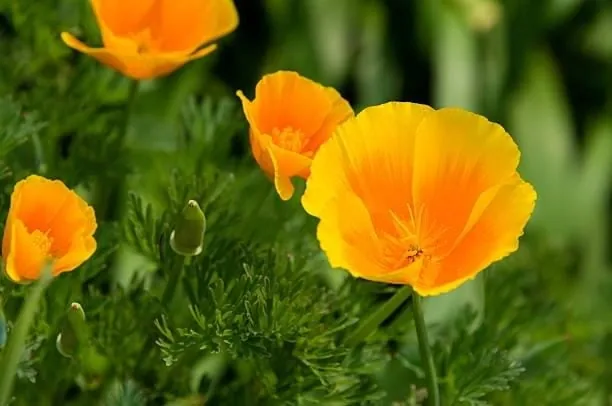
| California poppy whole plant extract, 90 mg | A mild sedative herb, a different plant from opium poppy and with no morphine in it | Human trial evidence is thin. Laboratory work found the extract can affect the liver enzymes and transporter that clear many prescription drugs |
Nothing in that last column is a study of a finished capsule. The corydalis work in particular is a single purified molecule tested in rodents (Zhang and colleagues, 2014), which is a long way from a powdered extract in a gelatin shell. The ingredients page takes each plant separately.
Is drowsiness a side effect here, or the point?
Closer to the point. When three of five plants are sedating, feeling sleepy is the formula behaving as designed, and treating it as a surprise leads people to the wrong decision about it.
That matters because of what you do next. A genuine side effect is a reason to consider stopping. An expected effect is a reason to plan around it. The label is no help there, because it says only to take two capsules daily and gives no time of day at all. The post on evening timing works through a first dose.
NCCIH lists drowsiness, dizziness and confusion among the possible effects of passionflower, and notes that the research on anxiety and sleep is small and not definite (NCCIH). Both halves of that sentence are worth keeping. The evidence for benefit is thin and the drowsiness is real.
What happens when sedating herbs stack with other things?
They add up, and the total is what you feel. Anything else that pushes in the sleepy direction should be treated as part of the same dose.
- Alcohol. It is the most common thing people add without thinking of it as adding anything.
- Sleeping tablets, whether prescribed or bought over the counter.
- Sedating antihistamines, which includes many cold, flu and allergy products.
- Prescription sedatives, including benzodiazepines and muscle relaxants.
- Anything prescribed for anxiety, seizures or nerve pain that already makes you drowsy.
There is a second, quieter interaction worth raising with a pharmacist. Laboratory work on California poppy found the extract and its alkaloids can affect CYP enzymes and P-glycoprotein, part of how the body clears many prescription drugs (Manda and colleagues, 2016). That was done in the laboratory rather than in people, so it is a reason to mention the bottle, not a reason to panic. The side effects page collects the rest.
What does an extract ratio like 10:1 tell you?
Less than most people assume. The corydalis line on this panel reads “Root Extract 10:1” at 200 mg, and that ratio describes how the extract was made rather than how strong it is.
| The 10:1 line tells you | The 10:1 line does not tell you |
|---|---|
| Roughly ten parts of dried root went in for one part of extract out | Which part of the plant went in, or the quality of that starting material |
| By arithmetic on the printed 200 mg, that is about 2,000 mg of starting root | What solvent was used, which changes which compounds survive |
| The extract is concentrated rather than plain powder | How much of any active compound is in the finished 200 mg |
| It is a manufacturing description | It is not a strength, a dose or a guarantee of consistency between batches |
The arithmetic in the second row is the part worth understanding. Ten to one means roughly ten units of dried plant were processed to yield one unit of extract, so 200 mg of a 10:1 extract is often described as equivalent to about 2,000 mg of root. That is a calculation on the printed 200 mg and nothing more. It assumes the ratio is accurate and that the compounds you care about survived the process. Neither assumption is published here.
It is still better than nothing. Compare it with the passion flower line, which reads “Herb Powder” at 350 mg with no ratio at all.
What is standardization, and why does this label not give it?
Standardization means the maker measures a named compound in every batch and states the figure, so that one bottle matches the next. A standardized extract line looks like “standardized to 4% of a named compound”. Nothing on this panel looks like that.
Why it matters is straightforward. Two batches of the same herb, grown in different places and picked in different months, can differ several times over in the compounds that do the work. Standardising is how a maker promises that difference has been measured out.
So this label does an unusual thing. It publishes every amount, which most competitors avoid, and no standardization at all. You get precision about weight and silence about content, and it is worth knowing which of the two you have been handed.
How to read any sedating herbal label in five minutes
The same five checks work on every bottle in this aisle, and they take longer to describe than to do.
Count the sedating plants in the list
Passion flower, valerian, hops, lemon balm, California poppy and corydalis all belong to this group. Three in one product is a sedating formula.
Find the amount beside each name
This label gives one for all five, which many do not. You can read every figure on the Supplement Facts page.
Check whether the plant part is named
Root, leaf, flower and whole plant are different materials with different chemistry. This label names the part for three of the five, and not for passion flower.
Look for a standardization figure, then notice when there is none
A standardized extract states what it is measured against, such as a percentage of a named compound. Nothing on this panel does that.
Read the other ingredients line before the seals
On this bottle it begins with gelatin, an animal product, while the sales page carries a vegetarian seal. The printed line wins.
One last point catches people out. Surgery is a reason to stop herbal products in advance, and NCCIH advises against taking passionflower before an operation because of a possible interaction with anesthesia (NCCIH). Tell the anesthesiologist what you take and follow your surgical team's instructions. The how to use page covers the daily routine.
Sedating herbs: questions worth asking
Is California poppy related to opium poppy?
They are both in the poppy family, but they are different plants. California poppy contains no morphine and is not an opioid.
Does a bigger milligram number mean a stronger herb?
Not between different plants, and not between a powder and an extract. Milligrams measure weight, not effect.
Why are three sedating herbs in a product sold for nerve comfort?
Because calm and sleep are what those plants are traditionally used for. The product is also marketed with a phrase about energy production, and nothing in the formula is a stimulant.
Can I take this in the morning?
The label gives no time of day. Given three sedating plants, a morning dose is the timing most likely to leave you drowsy at the wheel or at work.
Sources for this page
- National Center for Complementary and Integrative Health. Passionflower. Source
- Manda VK, Avula B, Chittiboyina AG, et al. Modulation of CYPs, P-gp, and PXR by Eschscholzia californica (California Poppy) and its alkaloids. Phytotherapy Research, 2016. Source
- Zhang Y, Wang C, Wang L, et al. A Novel Analgesic Isolated from a Traditional Chinese Medicine. Current Biology, 2014. Source
- National Center for Complementary and Integrative Health. Using Dietary Supplements Wisely. Source
Keep reading
Ready when you are
Order Nerve Fresh from the U.S. retail desk
Two capsules a day. Follow the label on your bottle. 180-day money-back guarantee. A real person at +1 (302) 200-3480 for orders, tracking and refunds.